

What Happened
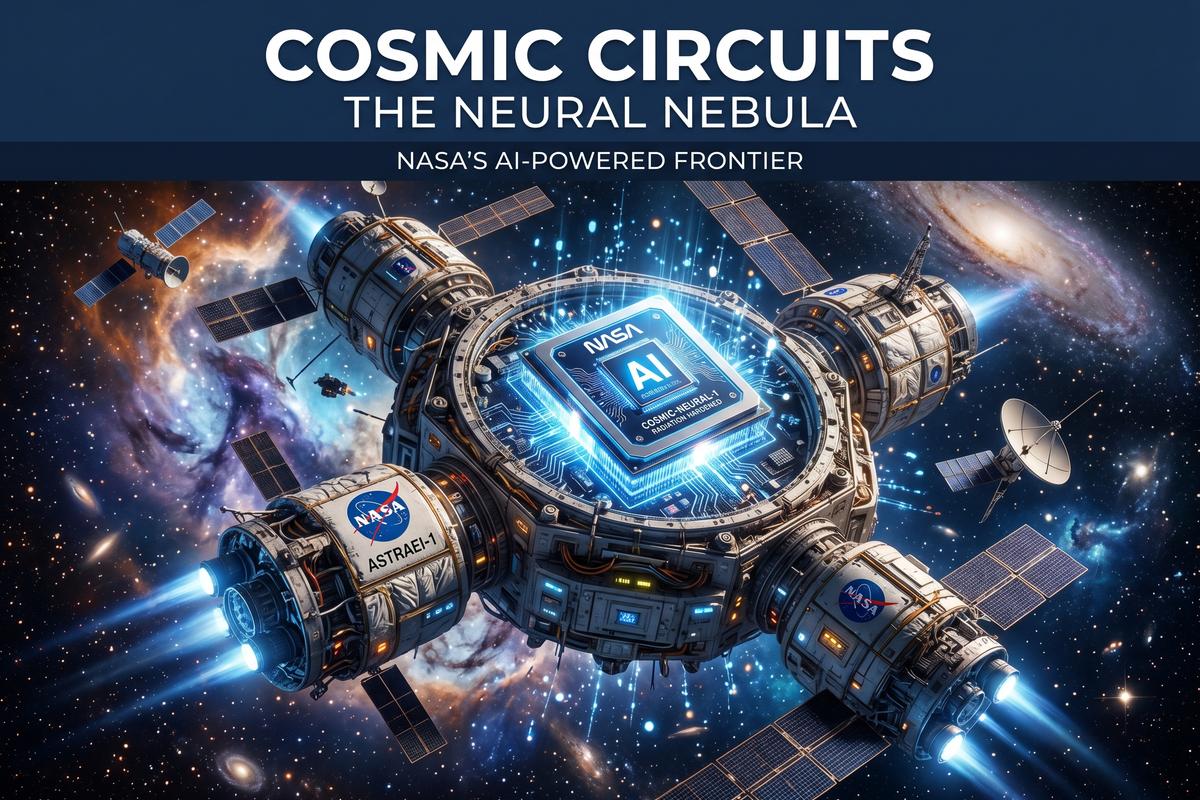
NASA announced today that its High Performance Spaceflight Computing project has begun testing a new radiation-hardened AI processor that delivers roughly 500 times the computing power of chips currently used in spacecraft. The processor is being put through rigorous radiation, thermal, and shock tests at the Jet Propulsion Laboratory (JPL) in Southern California.
Current space missions rely on decades-old processors chosen for their durability in extreme conditions rather than their performance. The new multicore chip is designed to be fault-tolerant, flexible, and capable of enabling spacecraft to operate far more autonomously — a critical requirement for deep-space missions where communication delays with Earth can stretch to 20+ minutes.
“We are putting these new chips through the wringer by carrying out radiation, thermal, and shock tests while also evaluating their performance through a rigorous functional test campaign,” said Jim Butler, High Performance Space Computing project manager at JPL. Early results have been “highly encouraging,” with the processor functioning as intended under simulated real-world conditions including planetary landing scenarios.
Source
📰 ScienceDaily — NASA’s new AI space chip could let spacecraft think for themselves
Why This Matters
Space computing has been stuck in a performance time warp for decades — the RAD750 processor powering most current missions is based on a PowerPC architecture from the late 1990s. A 500x leap doesn’t just mean faster science data processing; it enables fundamentally different mission architectures where spacecraft can make autonomous decisions about hazard avoidance, landing trajectories, and scientific observation prioritization without waiting for ground control.
For Moon and Mars missions, this is the difference between a spacecraft that phones home before every maneuver and one that can react in real-time to terrain hazards or unexpected conditions. The radiation-hardening requirement makes this especially impressive — achieving modern computing performance while surviving solar particle events and cosmic rays is an engineering challenge that has historically kept space computing a generation or two behind consumer hardware.