

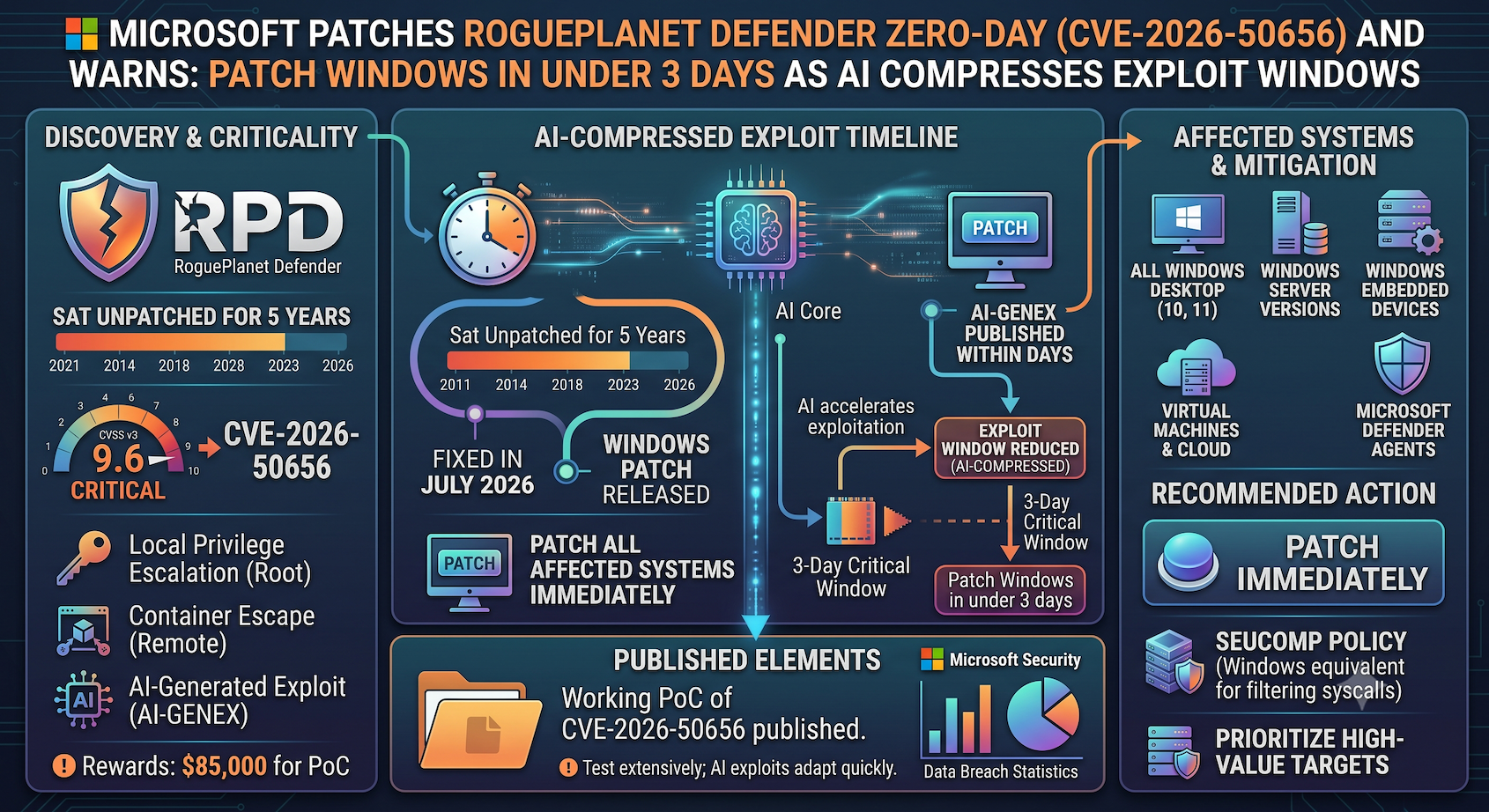
Microsoft patched “RoguePlanet” (CVE-2026-50656), a zero-day privilege escalation vulnerability in Microsoft Defender, on July 9, 2026. The flaw exploits a race condition in Defender’s threat remediation engine to grant attackers SYSTEM-level code execution on Windows 10, Windows 11, and Windows Server systems. A public exploit had been available for approximately one month before the patch was released; the fix was delivered as an automatic update to the Microsoft Malware Protection Engine (version 1.1.26060.3008), meaning most endpoint-managed systems received it without manual intervention.
Simultaneously, Microsoft published guidance urging organizations to shorten their Windows update deployment timelines to fewer than three days, citing AI-assisted exploitation as the driver. The guidance argues that AI tools are dramatically compressing the window between public patch release and attacker weaponization of disclosed vulnerabilities, making traditional 30- and 90-day quality update deferral cycles dangerously permissive. Microsoft cited internal data showing that AI-assisted vulnerability analysis can reverse-engineer an exploitable attack chain within hours of a patch being released — making the one-month gap before RoguePlanet was patched a sobering case study in the problem they’re now warning about.
Source: The Hacker News | Help Net Security | Microsoft Windows Blog
Commentary: The RoguePlanet patch matters on its own — Defender privilege escalation to SYSTEM is a high-value primitive for ransomware operators doing post-exploitation work, and a month-long window with a public exploit is unacceptable for a security product. But the operational guidance Microsoft published alongside it may be the more consequential story for defenders.
Sub-3-day update cycles are operationally difficult for most enterprises, particularly those running OT environments, legacy infrastructure, or strict change management processes. But if Microsoft’s assessment is accurate — and the trend data from the past 18 months supports it — organizations stuck in monthly or quarterly patch cycles are operating on borrowed time. The argument is straightforward: AI has broken the traditional assume-you-have-30-days-to-patch model. Patch management programs that don’t adapt to that reality are going to keep getting burned.