

Summary
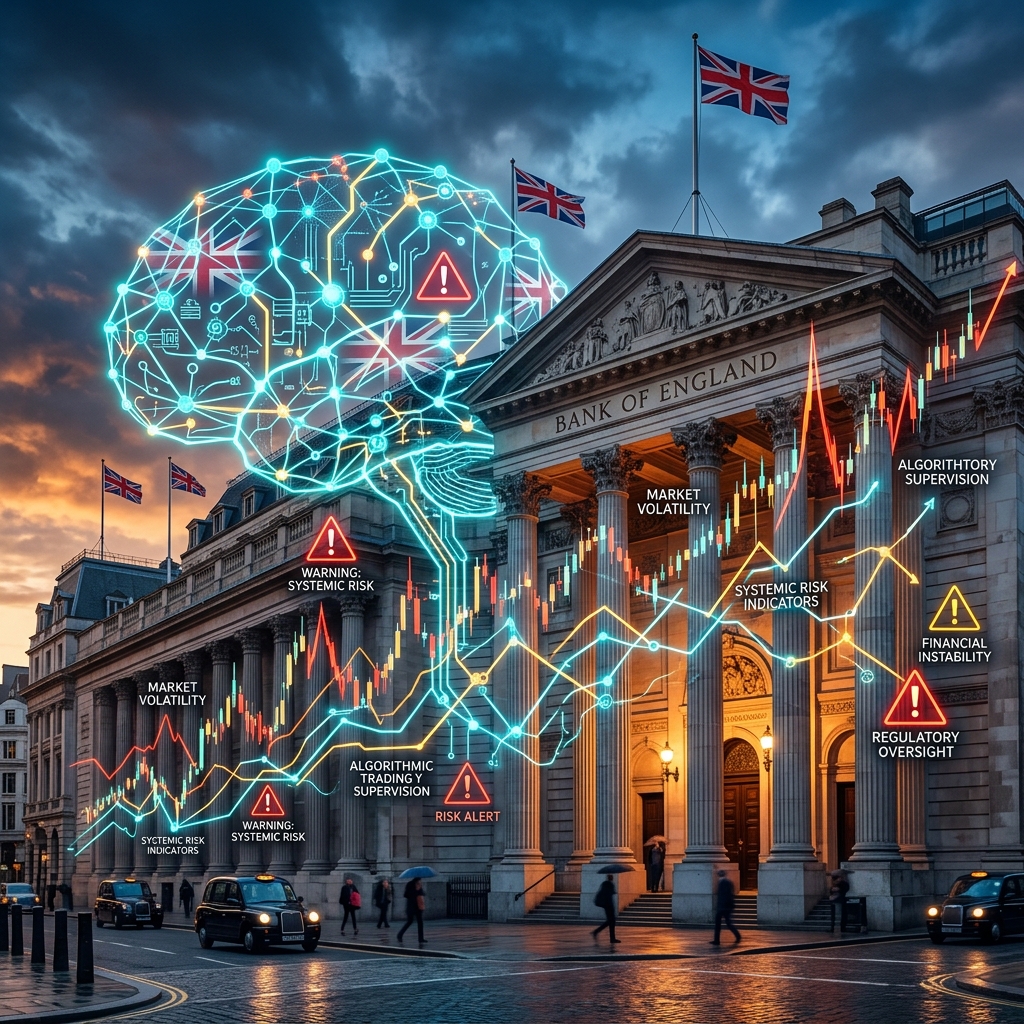
The UK’s most powerful financial authorities — the Bank of England, HM Treasury, and the Financial Conduct Authority — issued a joint warning on May 15, 2026, declaring that frontier AI models now surpass skilled human practitioners in cyber capabilities, operating at “significantly higher speed, greater scale, and lower cost.” They urged all British companies to take immediate action to plan for and mitigate AI-driven cyber risks.
Bank of England Prudential Regulation Authority CEO Sam Woods specifically warned that models like Anthropic’s Mythos and ChatGPT 5.5 Instant are identifying software vulnerabilities at industrial scale, putting enormous pressure on financial firms to patch faster. He identified software patching as the number one cause of outages across the UK financial system.
The Bank of England is now conducting scenario analysis on how AI trading agents might behave during market stress, specifically studying “herding” behavior that could amplify volatility. The Financial Policy Committee has identified potential corrections to AI-related equity valuations as one of three main sources of stability risk.
Sources
- ShareCafe — UK Regulators Urge Firms to Mitigate AI Cyber Risks
- Retail Banker International — Bank of England AI Financial Disruption Warning
- QA Financial — BoE Moves to Test AI Risks
Commentary
When a central bank, a finance ministry, and a financial conduct regulator issue a coordinated joint warning about AI — that’s not routine box-checking. That’s genuine alarm. The explicit statement that frontier AI models already exceed skilled human practitioners in cyber offense capabilities is remarkable coming from conservative institutions that typically understate risks.
The dual-threat framing is especially interesting: AI models are simultaneously making it easier to find and exploit vulnerabilities (offense) while also creating new systemic risks through AI-powered trading agents that might amplify market crashes (contagion). The Bank of England is essentially saying the financial system faces a new class of risk that didn’t exist 18 months ago. Organizations that haven’t started stress-testing their AI exposure — both as an attack vector and as a systemic dependency — are already behind.