

Summary
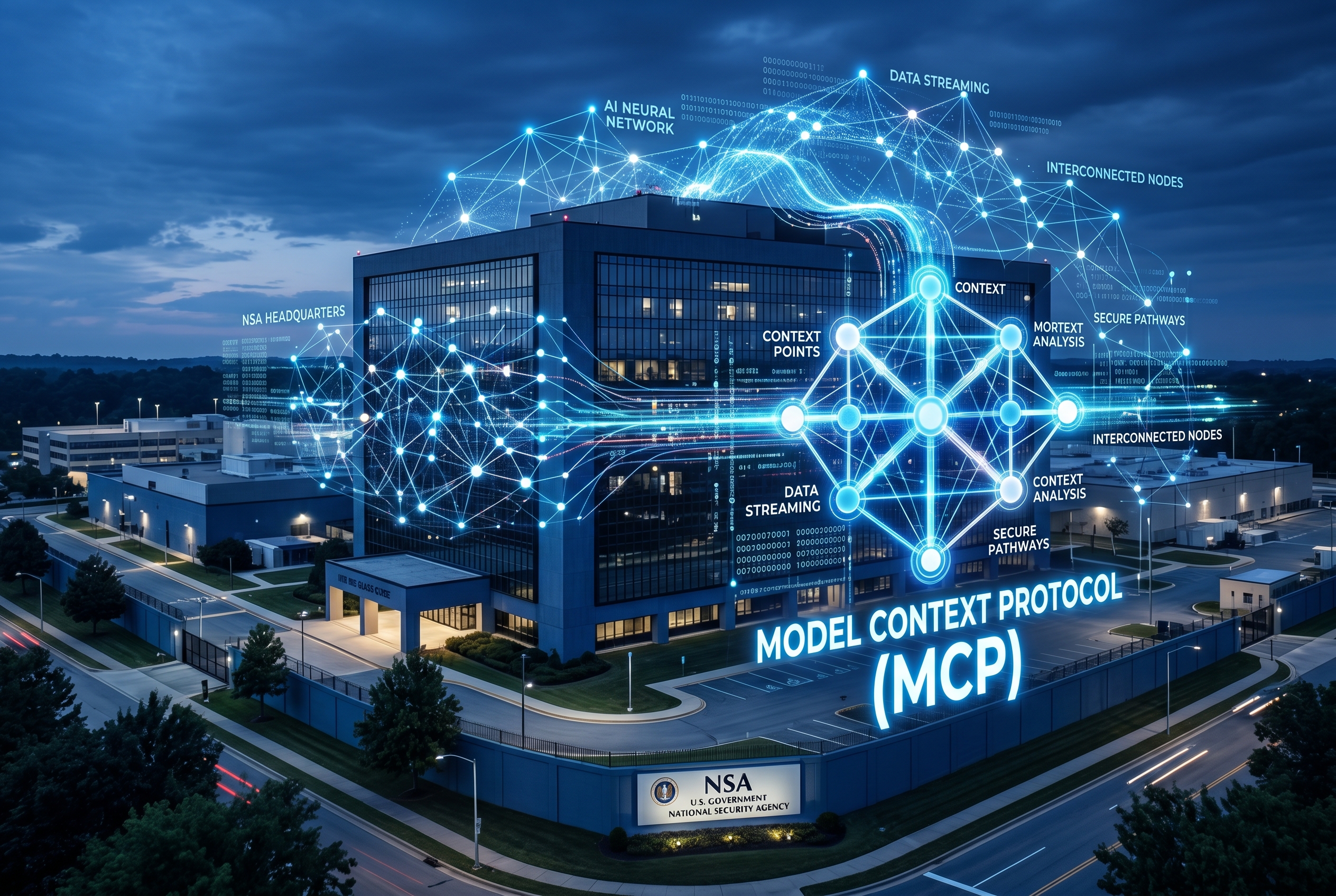
The National Security Agency’s Artificial Intelligence Security Center (AISC) has released a Cybersecurity Information Sheet titled “Model Context Protocol (MCP): Security Design Considerations for AI-Driven Automation.” The guidance addresses the growing adoption of MCP — an application-level protocol used by many AI-enabled systems for managing interactions between services — and warns that current implementations require “careful and cautious” security consideration.
The NSA notes that real-world MCP adoption has accelerated rapidly, with the protocol now found in AI deployments across business, finance, legal, software development, and other industries, including for sensitive tasks like querying personally identifiable information. The report identifies significant security concerns including serialization risks, trust boundary gaps, and agent misuse potential.
Critically, the NSA warns that traditional cybersecurity principles like authentication, authorization, and input validation — while necessary — are insufficient for agentic AI systems. MCP introduces novel risks like dynamic tool invocation, implicit trust relationships, and context sharing that require treating the entire agentic environment as a security continuum.
Source
Commentary
This is a significant moment: the NSA is officially sounding the alarm on MCP security, and the timing couldn’t be more relevant. MCP has become the de facto standard for connecting AI agents to tools and data sources, yet its security model remains immature. The NSA’s observation that “misaligned assumptions at any stage can propagate and compound into exploitable conditions” is a polite way of saying the protocol was designed for developer convenience, not adversarial environments.
What makes this guidance particularly valuable is the explicit acknowledgment that traditional security frameworks don’t map cleanly onto agentic AI systems. Dynamic tool invocation — where an AI agent decides at runtime which tools to call and with what parameters — fundamentally changes the threat model. Organizations rushing to deploy MCP-based AI agents in production should treat this NSA guidance as required reading before their next sprint planning session.