

Summary
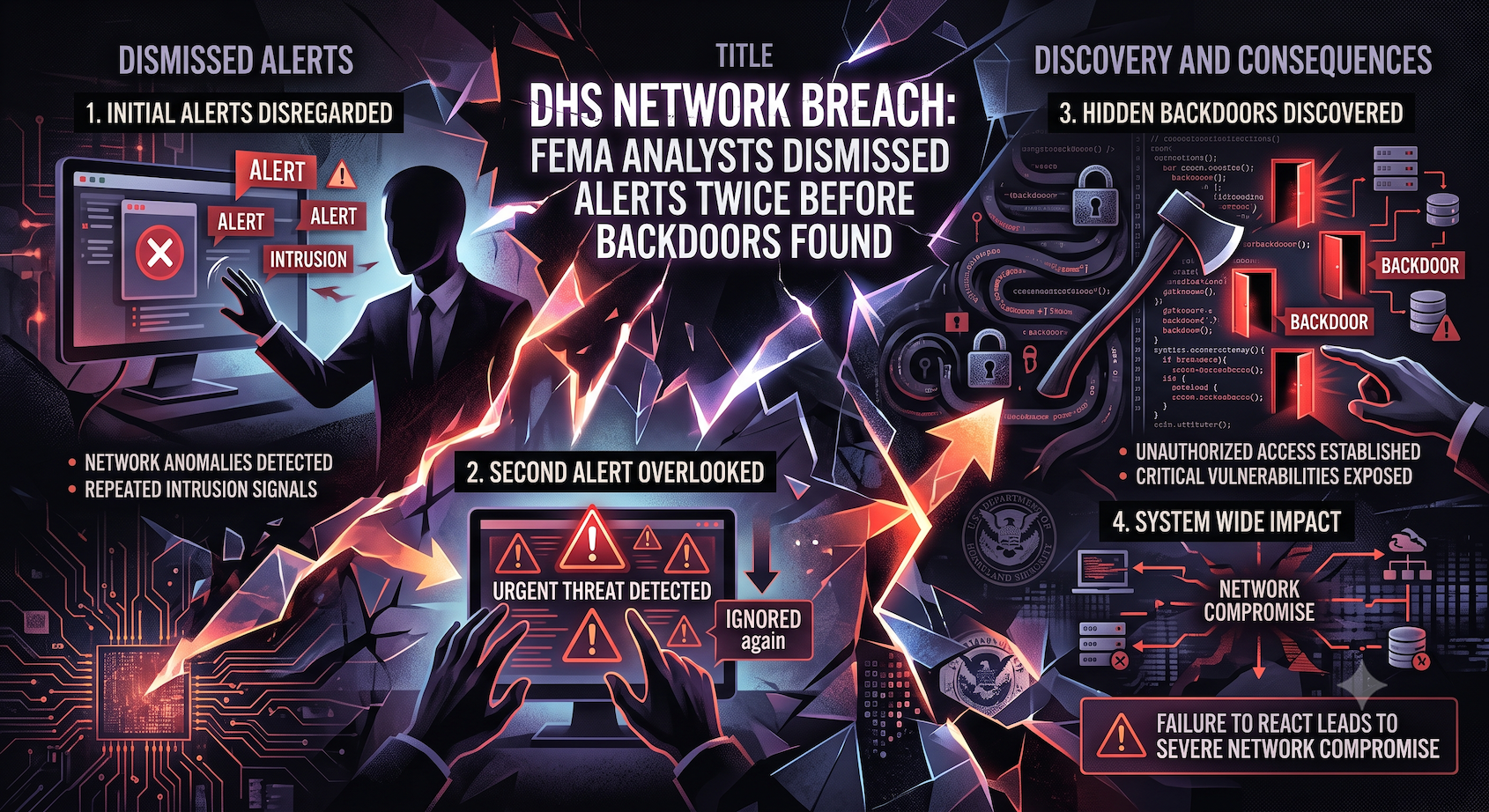
The Department of Homeland Security suffered a significant network intrusion in which attackers gained access to the Homeland Security Information Network (HSIN), installed hidden backdoors, and exfiltrated credential data — all while FEMA analysts dismissed the initial alerts as false positives. The breach remained undetected for weeks.
According to reporting, FEMA personnel encountered signs of compromise on the network in mid-May and again in early June 2026, but dismissed the activity as noise on both occasions. The full scope of the intrusion was not recognized until June 4, when analysts discovered the planted backdoors and realized credentials had been stolen. HSIN is a sensitive network used for sharing threat intelligence and incident coordination across federal, state, local, and tribal entities.
The incident has drawn sharp criticism over alert triage and incident response within DHS — particularly given that the agency coordinates national cybersecurity defenses through CISA. The full attribution and scope of what was accessed via stolen credentials remains under investigation.
Source
Gizmodo — DHS Cybersecurity Has an “I’m Sure It’s Nothing” Problem
Commentary
This is textbook alert fatigue with catastrophic consequences. Analysts at the agency responsible for defending US critical infrastructure dismissed active compromise indicators — twice — on a network used to share sensitive threat intelligence across the entire federal apparatus. CISA spends considerable effort telling the private sector to take alerts seriously while its parent agency’s own analysts were snoozing through live intrusion signals.
The broader concern is what was exfiltrated via those stolen credentials after June 4 — or during the uncontested weeks of access between mid-May and June 4. Credentials from HSIN could provide access to sensitive inter-agency threat intelligence, law enforcement data, and incident coordination records. This is the kind of breach that doesn’t generate a victim count headline but enables follow-on operations far more damaging than the initial intrusion.